

In this article
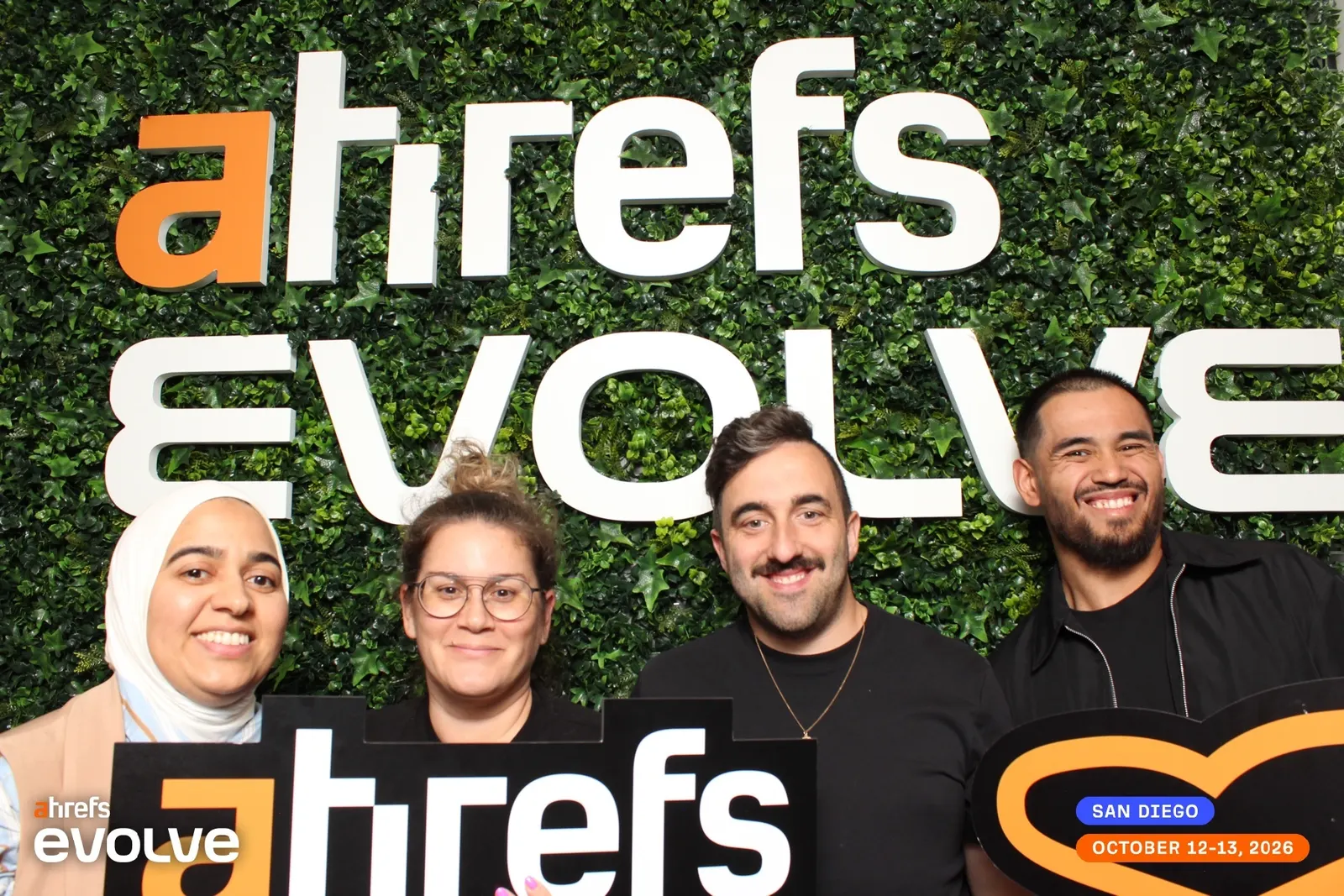
On October 12, Marie-Josée, Aaron, Maryama and I were in San Diego for the first day of Ahrefs Evolve, one of the most anticipated SEO and digital marketing conferences of the year. As an Ahrefs partner, Sitegrow could not miss it. And the message of the day was clear from the very first minutes. Search is changing faster than ever, and the brands that win will be the ones that are visible on Google and in AI answers alike.
For a Quebec agency like ours, events like this are invaluable. They let us test our instincts, compare our methods with the best in the world and bring back concrete ideas for our clients. Here is what we took away from the first day.
A full day devoted to search in the AI era
After a welcome from Tim Soulo, CMO of Ahrefs, the tone was set. Almost every talk revolved around the same question. How do you stay visible when a growing share of searches ends with an AI-generated answer and no click to a website?
Barely two years ago, this question was still a side topic at SEO conferences. Today, it owns the main stage. AEO, GEO and AI visibility came up in almost every talk, and the room was full of specialists all looking for the same thing, a reliable way to make their brand citable by AI assistants.
Distribution matters as much as the content itself
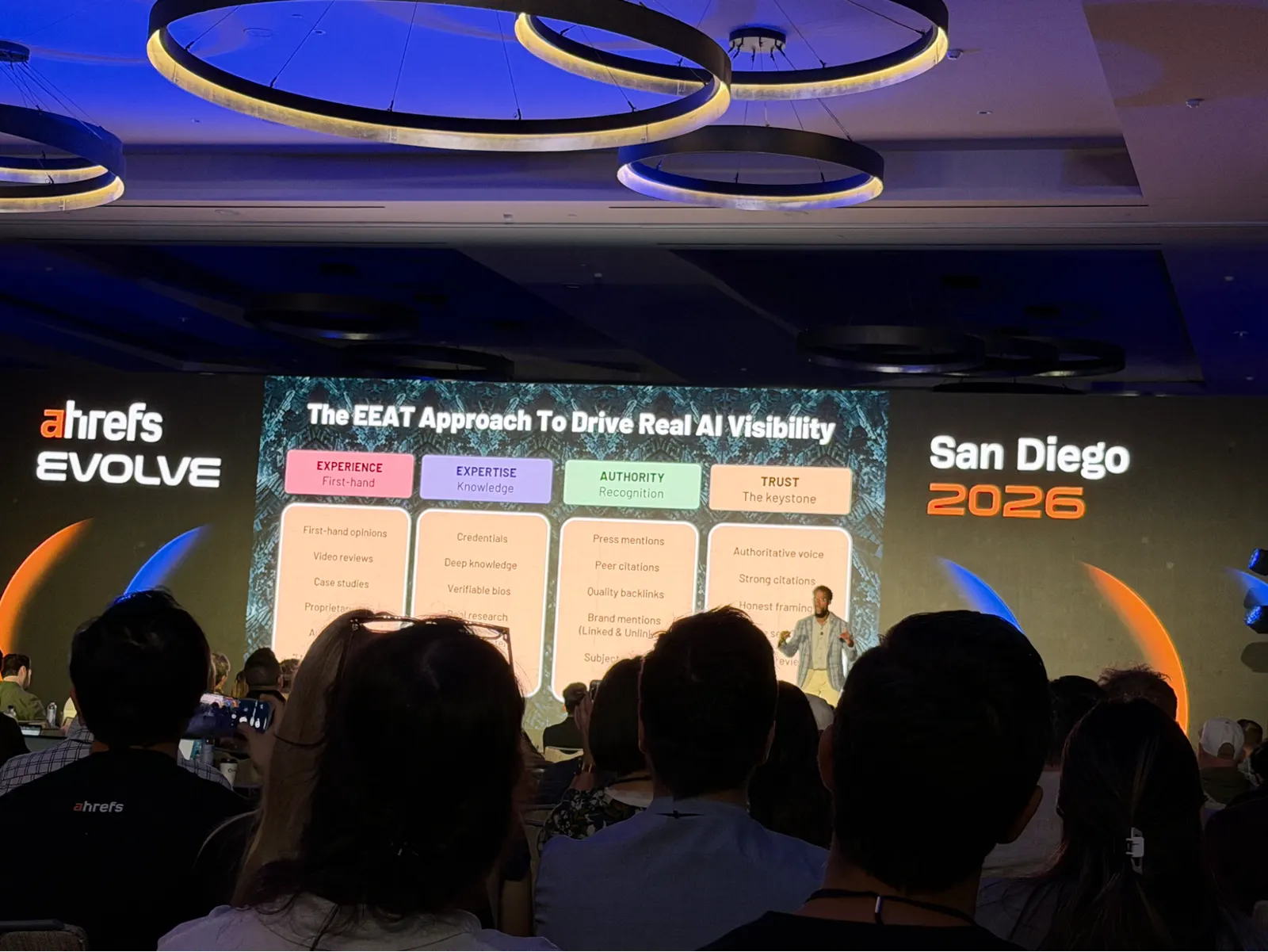
Ross Simmonds, founder of Foundation Marketing, kicked things off with a talk on content distribution. His point was simple. Publishing a good article on your website is no longer enough. You have to get it out where people are actually searching, whether on Reddit, on YouTube or through quality backlinks, combining traditional tactics with new AI-powered tools.
What we see with our clients
That is exactly what we see with our clients. AI assistants draw their answers from a wide range of sources. A brand that only exists on its own website starts out behind one that is mentioned in forums, media, videos and guest articles.
Planning distribution from day one
In practice, this changes how content is planned. Every article should be designed with its distribution plan from the start. Where will it be shared? Which communities might talk about it? Which media might pick it up? It is an approach we are building into our strategies more and more, including managing our clients’ presence on Reddit and our guest post programs.
Being found is not enough, you have to be memorable
Ann Handley, bestselling author and partner at MarketingProfs, offered a welcome counterpoint. In the race for visibility, we all optimize to be cited and found. But are we still creating content people remember? She invited the room to ask what deserves to be accelerated by AI, and what instead deserves more time, more thought and more humanity.
GEO is not about shortcuts
For us, it is an important reminder. GEO is not about technical tricks or shortcuts. AI assistants cite brands that have something useful, credible and original to say. Generic, mass-produced content has no reason to be recommended by ChatGPT or Claude, since it says nothing the AI does not already know.
Why our writers stay in-house
That is also why we keep an in-house team of writers. AI helps us work faster, but the value of content always comes from the expertise, experience and point of view of the people who write it.
Measuring AI visibility, the new challenge
The talk by Kamila Olexa from Ahrefs particularly resonated with us. It focused on AI visibility, a territory no one has fully mapped yet. She tackled several very concrete questions. How do you find the questions buyers actually ask AI assistants? How do you interpret query volume in these tools? How do you compare your visibility with your competitors’? And how do you prepare your website so AI engines understand it properly?
Why we built Sitescore
We have been asking ourselves these questions for a long time. That is precisely why we built Sitescore, our own platform for measuring AI visibility. It lets us track how ChatGPT, Gemini, Perplexity, Copilot and Google’s AI Overviews talk about our clients’ brands, and steer our strategies with real data rather than gut feeling.
Seeing these issues presented on the Ahrefs Evolve main stage confirms one thing. Measuring AI visibility is no longer a niche topic. It is becoming essential for any business that wants to understand where it stands against its competitors.
SEO and AEO, what really makes the difference
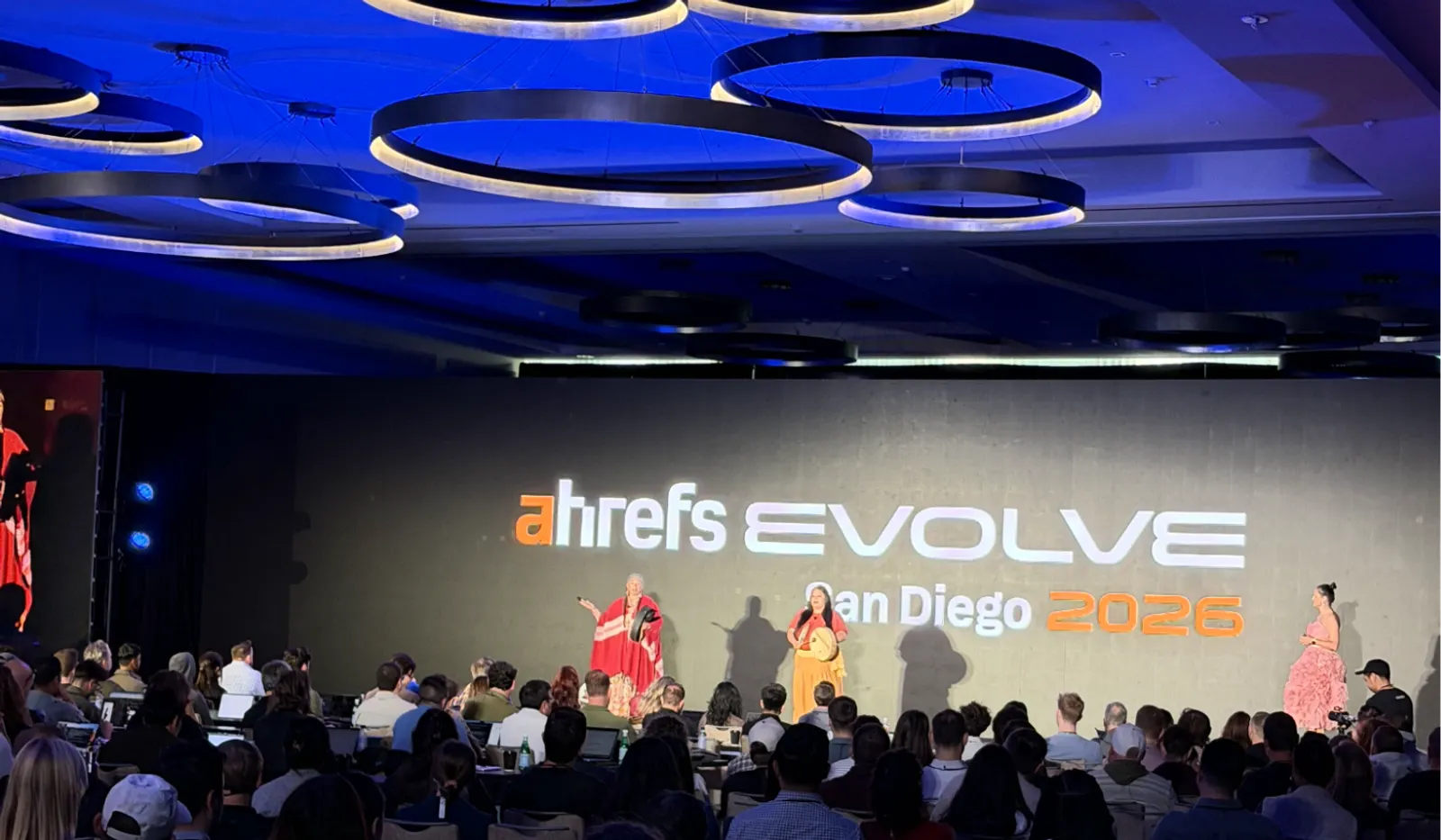
In the afternoon, Ethan Smith, CEO of Graphite, presented new research on how search is evolving in the AI era. Drawing on original studies, he debunked several myths about SEO and AEO, and highlighted structural changes in the way models present information. One finding caught our attention. Few brands are getting meaningful visibility in AI-generated answers yet.
The door is still wide open
In other words, the door is still wide open. Businesses that act now have a rare opportunity to get ahead of their competitors, before the field becomes as competitive as Google’s first page.
SEO is still the foundation
His message echoes what we keep telling our clients. SEO is not dead, far from it. It remains the foundation that AI visibility is built on. A technically sound website, clear content and recognized authority are exactly what AI assistants look for when they choose their sources.
AI as a force multiplier
Austin Lau, who built the growth marketing function at Anthropic, shared how he brings AI into a marketing team’s work. He laid out an approach built on a few pillars. Automate repetitive tasks, lean on AI where it goes further than we can, take on projects that would never have been profitable otherwise, and build your own tools when no one else will.
What it changes at Sitegrow
At Sitegrow, we live this transformation every day. We have built our own tools, like Sitescore and our SiteSonar audit tool, and AI is part of how we work. But it does not replace the expertise of our strategists. Instead, it frees them to spend more time on what really matters, namely strategy, analysis and the relationship with each client.
What we are bringing back to Quebec
Three big takeaways stand out from this first day.
- Visibility is no longer won on Google alone, but wherever your customers ask their questions, from AI assistants to forums and YouTube.
- Measuring AI visibility is becoming a central issue, and few businesses are tackling it seriously yet.
- The content that wins is still useful, credible and human, whatever the channel.
These takeaways strengthen our conviction that SEO and GEO must be planned together, in a single strategy. That is what we do for our clients, and what we will keep doing with everything we are learning here.
What it means for your business
If you run a business in Quebec, here are three questions to ask yourself right now.
Do you know what AI says about you?
Ask ChatGPT, Claude or Gemini the question a potential customer would ask to find a business like yours. Are you mentioned? Are your competitors?
Is your content easy to cite?
AI assistants favor clear, factual and well-structured answers. Vague or overly promotional content has little chance of being picked up.
Does your brand exist beyond your website?
Media mentions, reviews, a presence on your industry’s platforms, all of this shapes how AI assistants perceive your credibility.
See you tomorrow for our recap of day two of Ahrefs Evolve.
Want to know whether your brand shows up in ChatGPT, Claude or Gemini? Book a strategy call with our team and find out where you stand against your competitors.